
You got a quote. It was higher than the number in your head. Now you’re wondering whether you’re being taken for a ride, whether you should get two more quotes, or whether you should just wait a year.
Fair questions. Here’s the honest version.
Most of what you’ll read about renovation costs right now says the same thing: everything’s gone up, brace yourself. That’s only half right, and the half that’s wrong is the half that matters to you.
Materials have gone up. A lot, in some categories. But trade labour in Metro Vancouver has actually gone the other direction this year, and almost nobody in this industry is telling homeowners that, because it isn’t a great sales line.
It’s still worth knowing.
The materials part
It’s tariffs, mostly.
The Canada–U.S. trade fight that blew up in early 2025 reset input costs across North American construction. Bits of it have been walked back since, but the underlying structure stuck around longer than anyone expected.
Cushman & Wakefield ran the numbers in May 2026 and put the effect on Canadian construction material costs at roughly 9.2% on average. Canada’s own counter-measures piled on from the other side, including a 25% tariff on steel-derivative imports that took effect at the end of December 2025.
Altus Group’s 2026 cost guide points at metals as the main culprit nationwide. Structural steel, metal fabrications, and the metal-heavy guts of mechanical and electrical systems. That sounds like it belongs on a high-rise budget, not yours. It doesn’t. It shows up in your rough-in, your fixtures, your valves, your shower hardware.
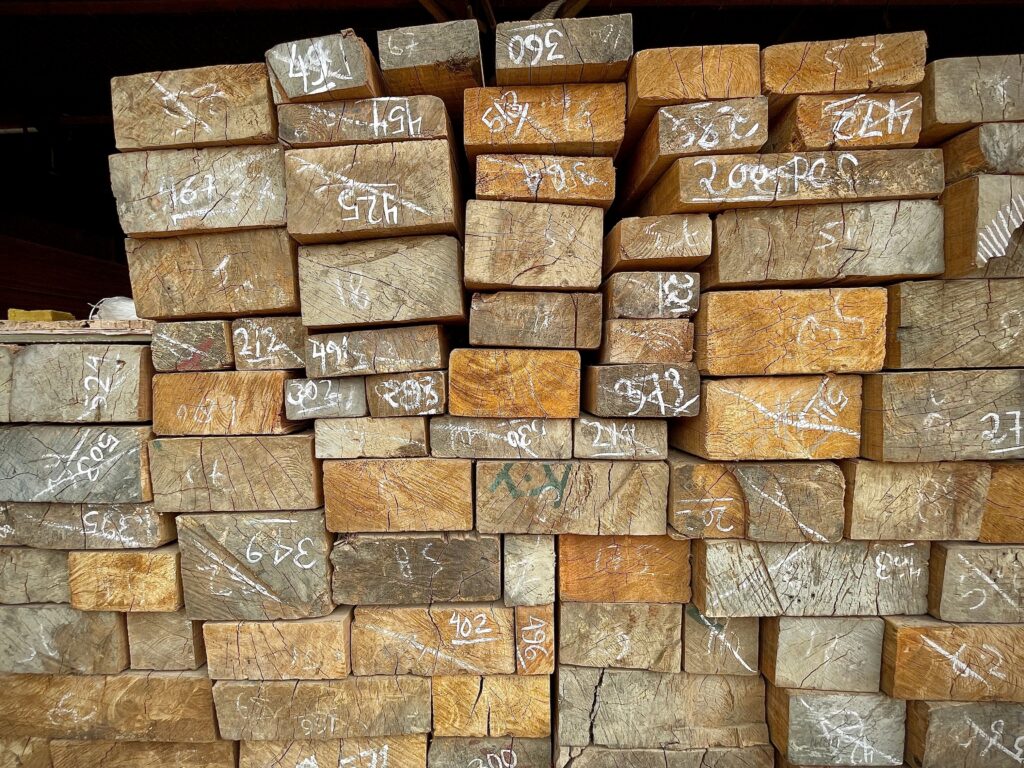
Lumber, oddly, has gone quiet. The post-pandemic glut worked itself through and prices softened. If your project leans framing rather than mechanical, you got lucky.
The part that catches people off guard
Price isn’t the only thing tariffs did.
When importers get hit with steep duties, they stop bringing in the long tail. They keep the bestsellers and the high-margin lines and quietly drop everything else. Supply chain researchers have been flagging this pattern for over a year now.
What that means for you: the tile you saved on Pinterest might not be available in Canada this year. Not expensive. Just gone. Same story with certain vanity profiles, hardware finishes, shower systems.
We check availability before we finalize a quote now, not after. Learned that one the hard way. A spec you can’t source isn’t a plan, it’s a delay with a price tag attached.
The labour part, where the story flips
This is where most renovation blogs in this market are still running last year’s script.
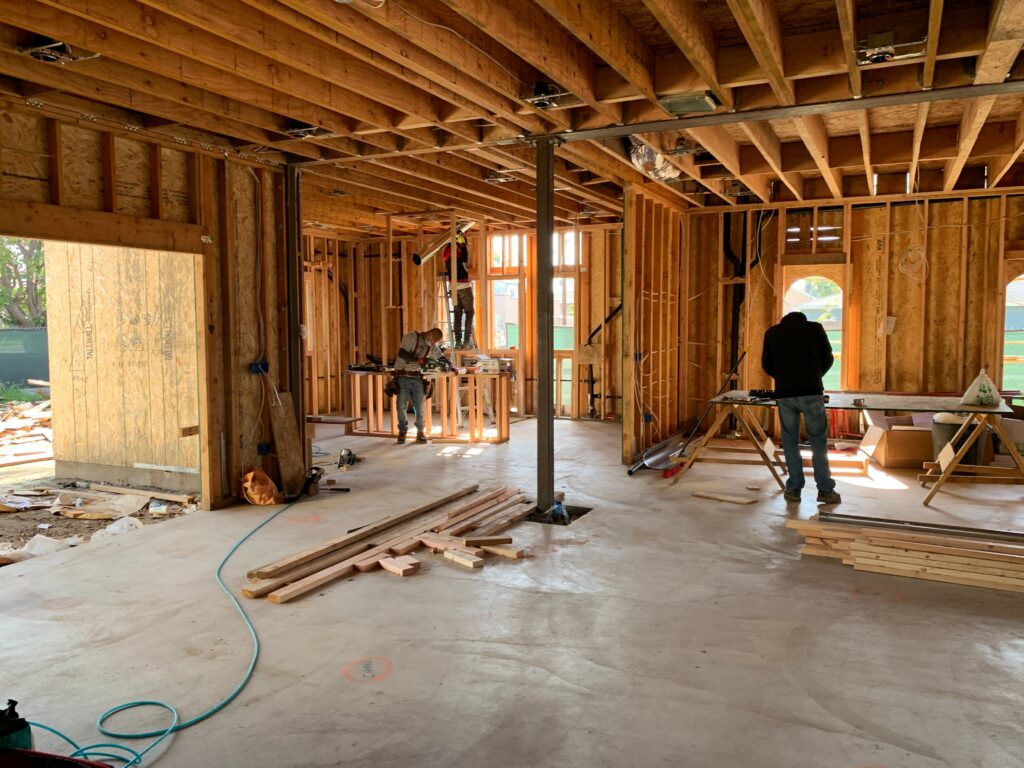
Through 2024 and into early 2025 the trades shortage in BC was genuinely brutal. About 72% of BC construction companies reported shortages. Good crews were booked six months out and turning work away.
That’s not where we are.
The ICBA surveyed more than 400 BC contractors in December 2025. Top concern: securing new projects, at 46%. Declining margins came second at 42%. Finding people dropped to third, at 39%.
So, plainly: right now the average BC contractor’s biggest problem is finding work, not finding workers.
Altus saw the same thing from the pricing side. Calgary, Edmonton, Montreal and Winnipeg all reported overall construction costs climbing 4% or more year over year. Toronto and Vancouver both went down. Condo and high-rise development softened hard in both cities, which dragged pricing down across concrete, formwork, reinforcing and glazing, and freed up trades who’d been tied up on those jobs.
That doesn’t make us cheap
Bathroom labour in Metro Vancouver still runs something like 20 to 40% above comparable work in most other Canadian cities. Three reasons, and none of them are going away.
BC requires certified trades for rough-in plumbing and electrical. That’s a real constraint on supply, and honestly, a real protection for you.
The housing stock is old. Big chunk of Metro Vancouver went up before 1980. Pull the tile off and galvanized supply lines, cast-iron drains and knob-and-tube remnants show up regularly. Not as a surprise. As a Tuesday.
And every municipality does it differently. Permit requirements, inspection scheduling, disposal fees — City of Vancouver sits at the top end on fees and dumping costs, while Delta, Ladner and Tsawwassen tend to be more straightforward. Condo work in Richmond and Burnaby adds strata approval and elevator bookings that detached work never deals with. Same scope, different number, depending on your postal code.
The long game hasn’t changed
None of this softness is permanent. BuildForce Canada projects 46,700 BC construction workers retiring between 2026 and 2035 — roughly 22% of the current workforce — against about 40,800 new local entrants under 30. Do that math and the province ends up short.
BuildForce also expects BC residential construction employment to shrink about 13% by 2035, with all of the loss in new-home construction. Renovation and maintenance work holds.
Which is to say: renovation is where the residential trades are heading, and the pool of people doing it gets tighter over the next decade, not looser.
Good trades have availability right now, and they’re pricing competitively. That window closes eventually.
The risk moved. It’s not price anymore.
Here’s the part nobody selling renovations wants to put in writing.
Hungry contractors quote sharper. Good for you. But a soft market also produces a very specific kind of failure, and it looks like this:
Quotes priced under what the work actually costs, with the gap clawed back through change orders once the walls are open. Scope written loose enough that “what’s included” becomes a negotiation in week three. Waterproofing shortcuts, because it’s the one thing you’ll never be able to inspect once tile goes over it. Uninsured operators competing purely on number. And outfits that quote a six-week job and may not exist in six weeks.
When the market’s tight, bad operators are busy. When it’s soft, bad operators are cheap — and cheap is exactly when homeowners stop asking questions.
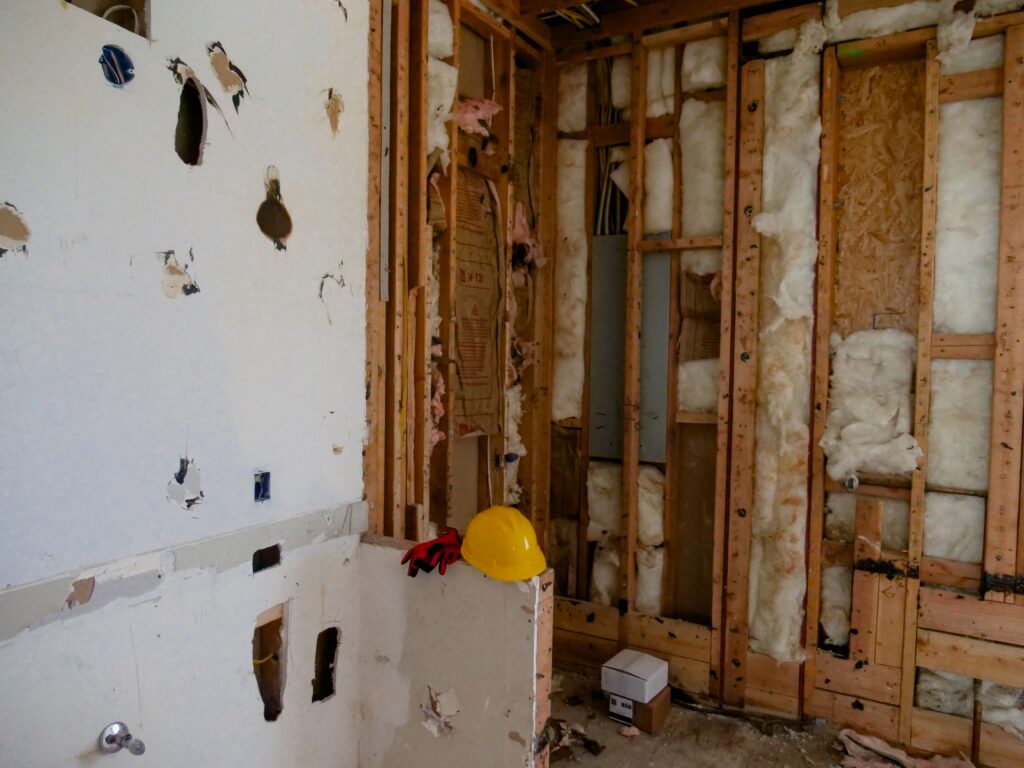
Take our recent bathroom renovation in Metro Vancouver, for example: the moment we pulled back the old tile, we uncovered severe, hidden water damage and rotted studs left behind by a previous quick-fix job. Left unaddressed, it would have compromised the structural integrity within months. We immediately walked the homeowner through the transparent repair costs and rebuilt the entire wet area using the Schluter waterproofing system from the studs up. A budget contractor would have simply slapped new tile right over the rot and sealed the time bomb inside the wall; we made sure it was done right.
So the question changes. It stops being “how do I get a good price” and becomes “how do I tell a real trade from a cheap one.”
Actually vetting a contractor in BC
Worth knowing up front: there’s no general contractor licence for renovating an existing home in British Columbia. Licensing covers new home construction. Individual trades — plumbing, electrical, gas — carry their own certification. So “licensed contractor” on a website means considerably less here than most people assume.
What actually tells you something:
Ask for a WorkSafeBC clearance letter. In writing.
Highest-value question you can ask, and almost nobody asks it. If a contractor isn’t registered and in good standing with WorkSafeBC and somebody gets hurt on your property, you can end up liable. Requesting a clearance letter takes them about thirty seconds. If they hedge, deflect, or explain why it isn’t necessary, you’ve learned what you needed to learn.
Ask who’s actually swinging the hammer.
Most renovation companies use subs. That’s normal, and often better — a dedicated tile setter beats a generalist every single time. What matters is whether they’re straight with you about it.
Ask who does their plumbing. How long they’ve worked together. Whether they’re certified. Someone with real relationships answers immediately and by name. Someone assembling a crew after they win your job gets vague.
Read the waterproofing line.
This is the tell for bathroom work.
A real quote names the system. Membrane by manufacturer, how corners and penetrations get treated, whether there’s a pre-sloped pan. A weak quote says “waterproofing” with a dollar figure beside it and moves on.
It’s the one part of your bathroom that’s completely invisible when finished and ruinously expensive to fix. That’s exactly why it’s where corners get cut. If someone can’t explain their system to you in plain language, that’s your answer.
Find out what’s an allowance and what isn’t.
If the quote includes tile, ask what tile. Ask what price per square foot they budgeted.
Plenty of quotes carry material allowances — placeholder numbers — without labelling them. You pick real materials, they cost more, and the project quietly grows by four thousand dollars. Nobody lied. You just weren’t told what you were reading.
Ask how change orders work before you sign, not after.
Every renovation of an older home hits something unexpected. That’s not failure, that’s what opening a wall in a 1970s house involves.
What separates a good contractor is process. Photos of what was found, a written price before anyone proceeds, your sign-off required. What you don’t want is finding out at invoice time.
Ask about the last job that went sideways.
References are easy to curate. This isn’t.
Someone with real mileage will tell you about an actual problem, what it cost them, and what they changed after. Someone who says nothing’s ever gone wrong either hasn’t done much work or isn’t being straight with you. Neither is what you want.
Where you can genuinely spend less
Most renovation companies skip this section, since it amounts to explaining how to give them less money. We’d rather have the conversation. Homeowners who understand their own budget make better decisions, and better decisions make better projects.
Leave the plumbing where it is. This is the biggest lever there is, and it isn’t close. Moving a drain — the toilet especially — means opening the subfloor and rerouting, and in this market that runs into thousands, plus permit implications. Keeping every fixture in its existing spot can still get you a completely transformed bathroom. Before committing to a new layout, ask whether it’s worth what it costs. Sometimes obviously yes. Often not, and nobody mentioned there was a choice.
Do two bathrooms at once if you’ve got two. Demo crew, plumber and tile setter mobilize once instead of twice. Tile, board and grout get ordered as one purchase. Protection and setup happen once. And frankly, one longer disruption is easier to live through than two separate multi-week ones a year apart.
Spend on what you can’t see. Save on what you can. Backwards from what most people do. Waterproofing, substrate, valves and ventilation are things you’ll never look at and can’t cheaply replace. Tile, vanity, mirror, hardware and paint are things you look at daily and can swap in eight years. Porcelain that reads as stone costs a fraction of stone and performs better in a wet room. A well-built shower behind mid-priced tile beats a badly built one behind expensive tile, every time, by a lot.
Book the shoulder season. Late fall, early spring. Less trade competition, shorter lead times than the summer crunch. In a market where crews are already looking for work, that stacks in your favour.
Nail down your scope before you collect quotes. The spread between contractors on the same bathroom can hit 30 to 50%. Most of that isn’t competitive pricing — it’s three companies interpreting a vague brief three different ways. Tell three companies “renovate my bathroom” and you get three different projects at three different prices, and comparing them is meaningless. Give them the same written scope and you get a real comparison.
We’ll help you write that scope even if you’re taking it to our competitors. It makes us easier to compare, which is sort of the point.
How we work
We do bathrooms across Metro Vancouver — Vancouver, Richmond, Burnaby, North Vancouver, West Vancouver, New Westminster, Delta, Ladner, Tsawwassen and White Rock. Full renovations, partial updates, and the small stuff most companies won’t drive out for.
The housing is different in each of them, and it changes what the job actually involves. Pre-1950 character homes in Vancouver hide plumbing you’ll have to deal with. Richmond and Burnaby condo work means strata approval and elevator bookings. North Vancouver’s sloped lots and older additions complicate drainage. West Vancouver work runs to higher finish tolerances. New Westminster’s older stock means better odds of a surprise on demo day. Delta, Ladner and Tsawwassen are mostly detached, simpler on permits, and we do a lot more ageing-in-place work there — tub-to-shower conversions, grab bars, curbless entries. White Rock is coastal, and moisture and ventilation deserve more thought than they usually get.
On pricing, our approach follows from everything above.
We talk before we quote. Before a number gets attached to anything, we walk through what you want, what your house will actually permit, and what each decision costs. Moving the toilet, upgrading the tile, going frameless on the glass — you see those priced separately, so the calls are yours instead of ours.
We’ll tell you where to spend less. If your layout works as-is, we’ll say so rather than sell you a relocation. If mid-priced tile performs the same as the premium option for your application, you’ll hear that too. We’d rather build a $22,000 bathroom you’re happy with than a $30,000 one you resent every time you walk past it.
Islero Projects Inc.
(236)882-8887
info@isleroprojects.com
Allowances get labelled as allowances, with the assumption stated. Changes get priced with photos and your approval before anyone proceeds. And if the project you want costs more than you want to spend, we’ll rework the scope with you rather than watch the whole thing stall. Sometimes that means phasing it. Sometimes it means moving the money somewhere else. It almost never means it can’t happen.
The finish standard we hold to comes out of Japanese building practice, where the joinery and the invisible prep work are treated as the whole point rather than the overhead. Clean lines, tight seams, waterproofing done properly before anything covers it. Costs a bit more time. Doesn’t cost more money. It’s the difference you live with for fifteen years.
Questions we get a lot
Is 2026 a good year to renovate a bathroom in Metro Vancouver?
On balance, yes. Materials are expensive, but trade availability and pricing improved as high-rise work slowed, and BC contractors now report finding work as a bigger problem than finding workers. That’s favourable for you. The structural labour shortage comes back later this decade as retirements outrun new entrants, so it isn’t a permanent condition.
Why is Vancouver more expensive than the rest of Canada?
Certification requirements for plumbing and electrical, an old housing stock that regularly reveals hidden conditions once demo starts, and stricter municipal permit and disposal rules. Bathroom labour here typically runs 20 to 40% above comparable Canadian markets.
Do I need a permit?
If you’re changing plumbing or electrical, generally yes. Purely cosmetic work that leaves the mechanical systems alone usually doesn’t. Fees and requirements vary — City of Vancouver at the higher end, Delta and Tsawwassen more straightforward — and your contractor should be handling the application. If someone suggests skipping a permit that’s required, be careful. Unpermitted work becomes your problem at resale, not theirs.
Do you do condos?
Yes. Condo bathrooms in Richmond, Burnaby, New Westminster and downtown Vancouver come with strata approval, elevator bookings, restricted work hours, building protection requirements and limits on what plumbing can be altered. It’s more time than complexity, but it needs planning rather than discovering.
Is a general contractor licence required for renovations in BC?
Not for an existing home. Licensing applies to new home construction, and individual trades carry their own certification. Which is exactly why WorkSafeBC registration and liability insurance are the things worth verifying.
Single biggest way to cut a bathroom budget?
Don’t move the plumbing.
Will material prices come back down?
Nobody can promise that. The tariff structure has proven more durable than expected, and most analysts expect costs to settle at elevated levels rather than retreat to 2024 pricing. Planning around today’s numbers beats waiting for a correction that might not show up.
Come talk to us before you commit to anything
If you’re weighing a bathroom renovation anywhere from Vancouver to White Rock, we’re happy to go through the numbers with you. Including the parts where you should spend less.
No pressure, no obligation, and a straight answer on whether the project makes sense right now. Sometimes that answer is “wait.” We’d rather tell you that today than after you’ve spent money.