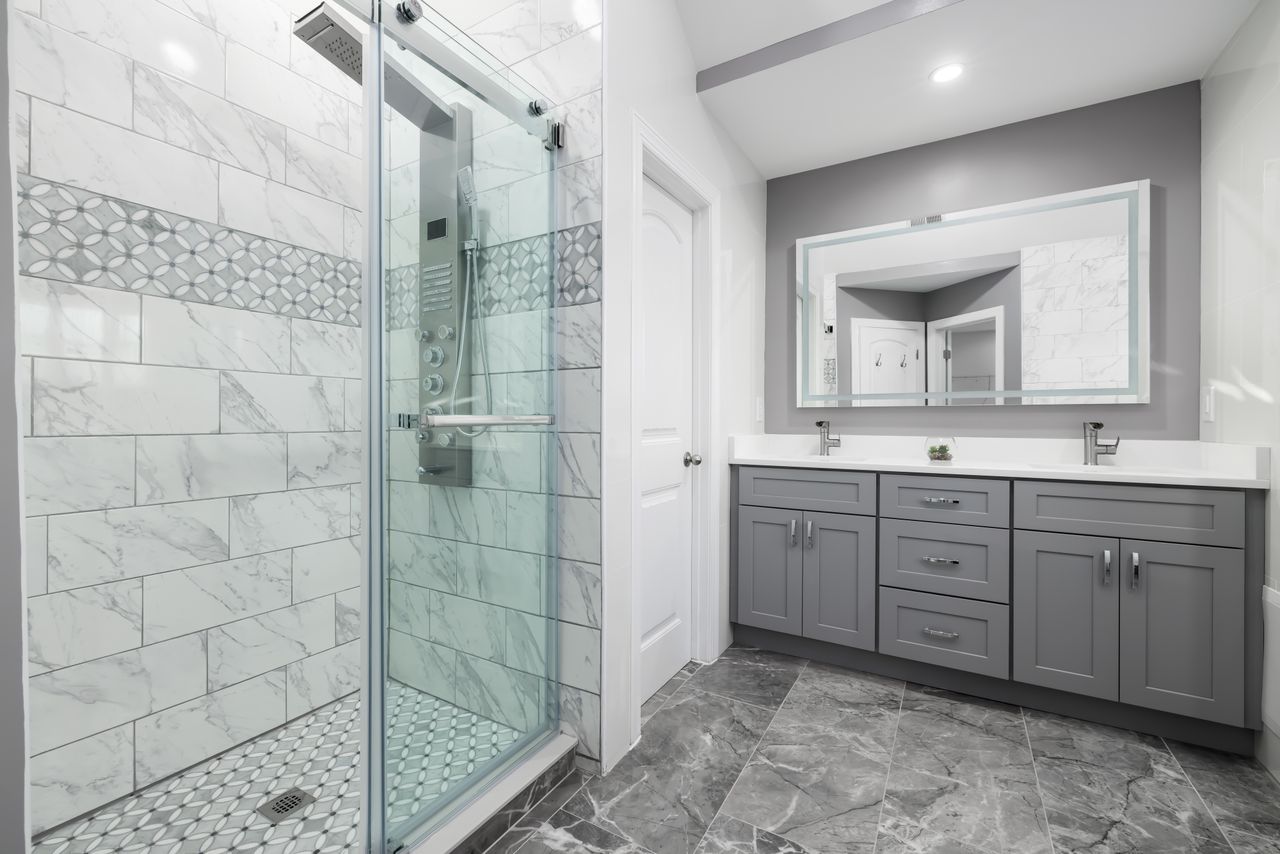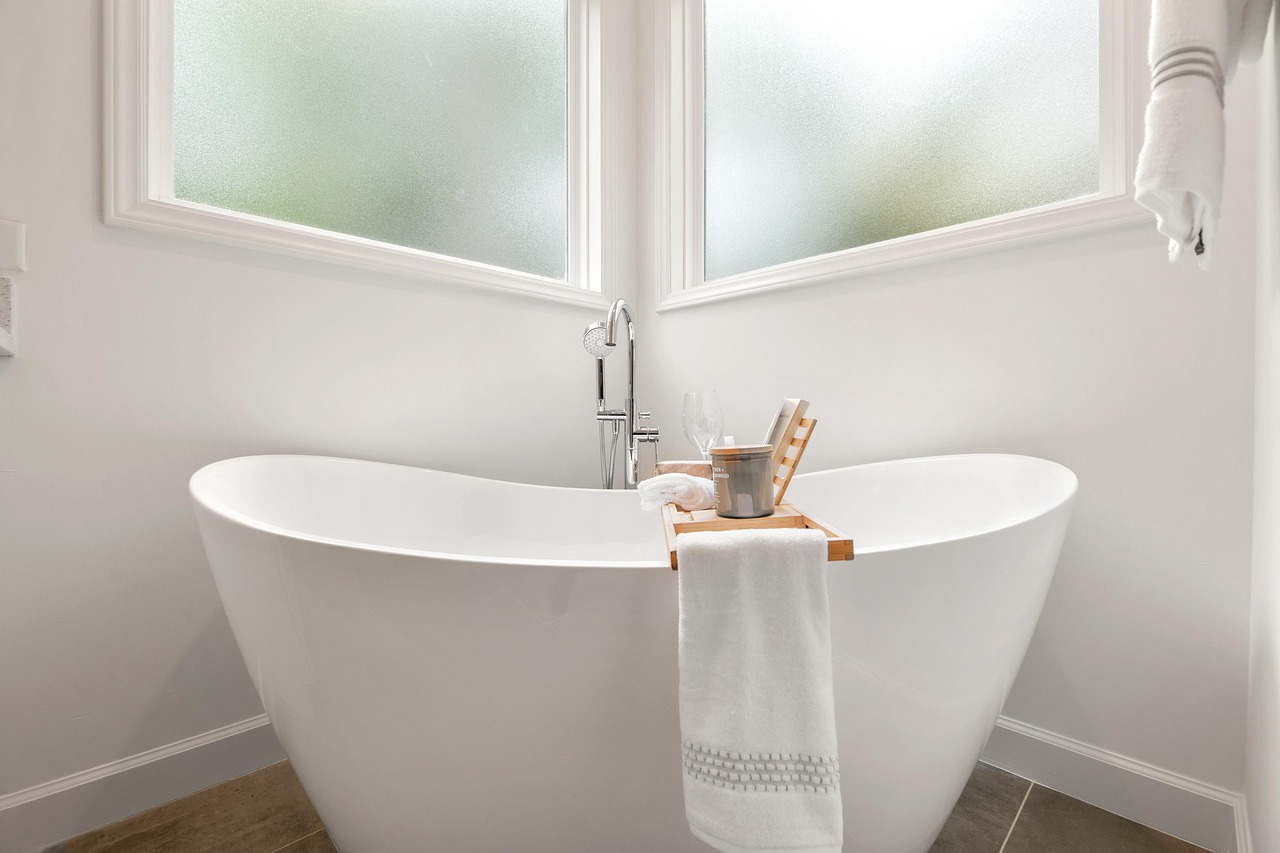

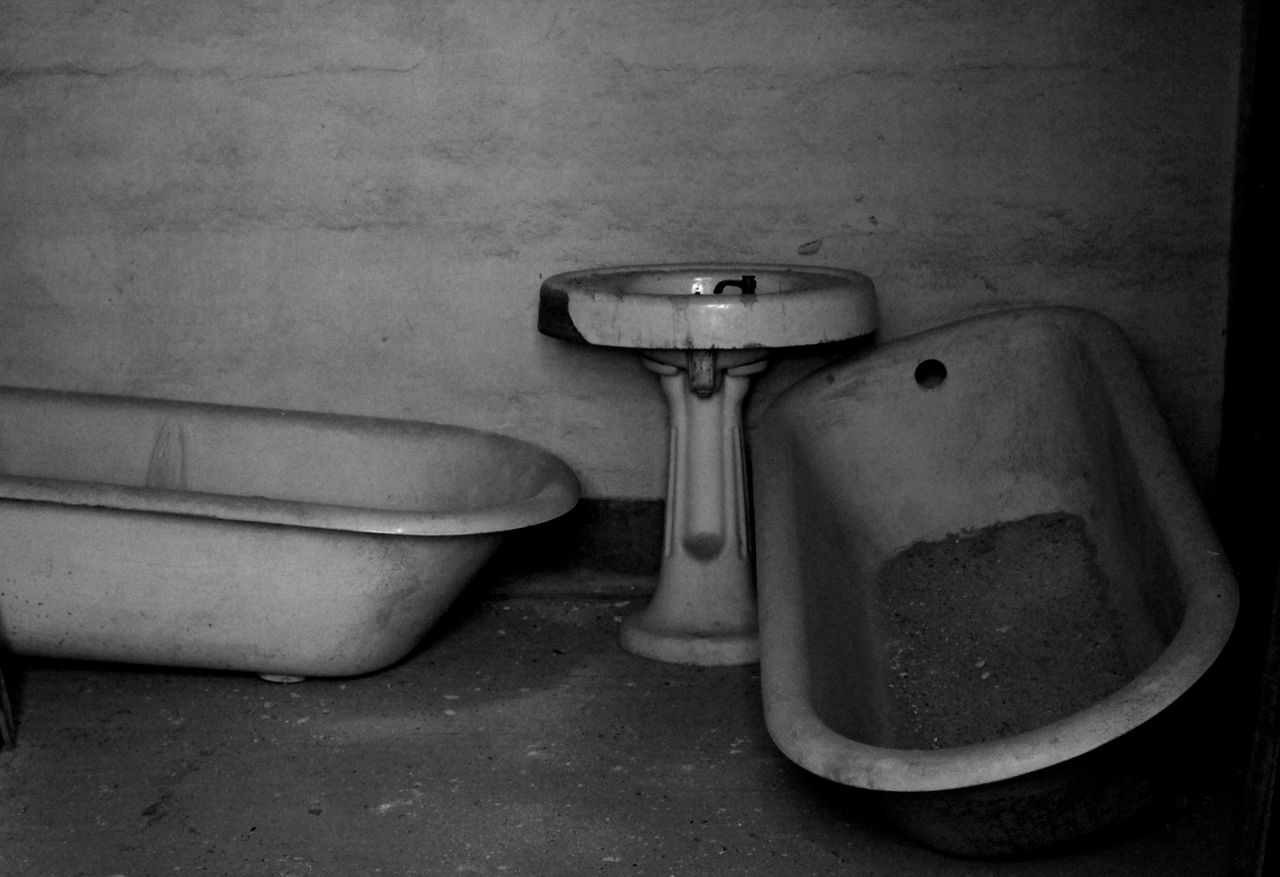
We turn down full renovations more often than you’d think — not because we don’t want the work, but because a vanity swap or a re-caulking job is genuinely what the bathroom needs. Small jobs aren’t a consolation prize for us. They’re often the most important call we get.
Here’s why.
How a $400 Fix Becomes a $20,000 Problem
A failing seal around a tub. A wax ring under a toilet that gave out eighteen months ago and nobody noticed. A hairline gap in the caulking where the shower pan meets the wall. None of these look serious. None of them are loud about it, either.
Water doesn’t pool where you can see it and wait for you to call someone. It finds the path of least resistance — down a stud, along a subfloor joist, into the insulation behind your drywall — and it keeps going until something stops it. Usually, what stops it is a contractor with a moisture meter, months or years later, standing in front of a wall that now has to come down.
The industry numbers back this up more bluntly than we’d put it ourselves. A minor leak that would have cost somewhere in the low hundreds to mitigate early can turn into a $10,000 to $30,000 reconstruction job once it’s been left long enough to spread. In Canada, homeowners dealing with water damage that’s already progressed typically land somewhere between $3,000 and $10,000 for a standard restoration — and that’s before mold enters the picture. Add mold remediation on top, and single-area jobs alone commonly run $1,200 to $3,800, with multi-room contamination pushing well past $10,000.
The gap between “we caught it early” and “we didn’t” isn’t a rounding error. It’s often a full order of magnitude.
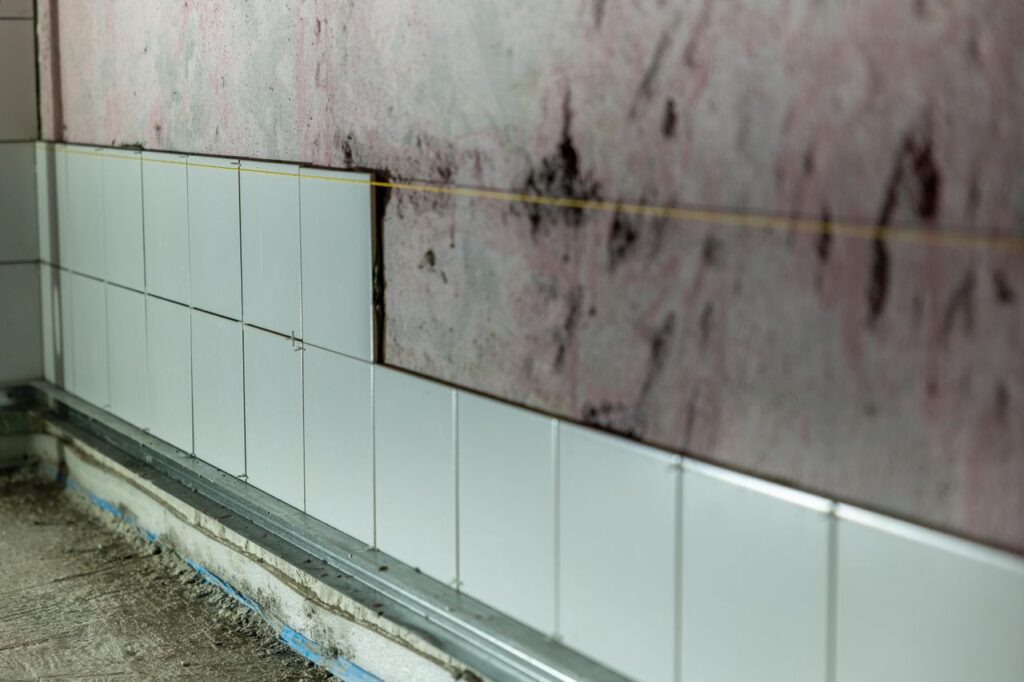
Mold Doesn’t Ask for Permission — and It Doesn’t Wait
Mold isn’t a slow problem. Under the right conditions — and a leaking bathroom provides exactly the right conditions — it can begin establishing itself within 24 to 48 hours of sustained moisture exposure. That’s not a worst-case estimate. That’s the standard window health authorities cite for when drying out a wet material stops being enough.
By the time mold is visible — a dark ring at the base of the wall, a shadow behind the vanity — it’s had weeks or months to spread somewhere you can’t see it. And the part that catches most homeowners off guard isn’t the smell or the stain. It’s that mold spores circulate through your air well before any of that becomes obvious. You can be breathing them in a bathroom that still looks completely normal.
That matters more than people expect. Children’s lungs are still developing, and prolonged exposure to mold spores has been linked to respiratory irritation and allergic response in both kids and adults. This isn’t a scare tactic — it’s just how mold biology works, and it’s exactly why we treat “it’s just a bathroom” as the wrong way to think about the room in your house that sees the most water.

What We Actually Do at a Free Inspection
We don’t inspect a bathroom by looking at it and telling you what we think. We bring a thermal imaging camera and a moisture meter to every visit, small job or large.
The thermal camera doesn’t “see” water directly — it reads surface temperature differences. Wet materials lose heat differently than dry ones, so a leak hiding behind tile or drywall shows up as a cooler patch the camera can pick up even when the wall looks completely fine to the eye. The moisture meter backs that up with an actual reading, pressed against the suspect area, giving us a number instead of a guess.
That combination means when we tell you something’s wrong, you’re not taking our word for it — you’re looking at the same image and the same reading we are. And when everything checks out clean, you get to walk away knowing that for certain, instead of hoping your contractor was being straight with you.
The “Small” Jobs That Are Really Preventive Maintenance
We treat these three jobs as infrastructure, not cosmetics:
Vanity Replacement. Pulling an old vanity out is one of the most common ways we discover a slow leak that’s been running for months under the cabinet, completely hidden from view.
Toilet Replacement. Wax ring seals degrade over time and rarely fail with any warning. A toilet that rocks slightly, or one that’s due for replacement anyway, is often sitting on top of a small leak nobody’s checked.
Bathroom Painting. Paint isn’t decorative — it’s a barrier against constant humidity, steam, and splashback. Once it starts to peel or fade, that barrier is gone.
None of these require tearing your bathroom apart. All three take a day or less. And all three are exactly the kind of work that keeps a $400 problem from becoming a $20,000 one.
Signs Worth Getting Checked
You don’t need visible flooding to justify a call. Some of the most expensive damage we’ve dealt with started with something this ordinary:
- A musty smell that comes and goes, especially after a shower
- Caulking that’s cracked, peeling, or has gone slightly yellow or black at the edges
- A toilet that rocks even slightly when you shift your weight on it
- Discoloration on the ceiling or wall of the room below your bathroom
- Flooring near the tub or vanity that feels the slightest bit soft underfoot
Any one of these on its own might be nothing. But they’re also exactly what a leak looks like in its early, cheap-to-fix stage — which is the only stage where “cheap to fix” is still on the table.
If Something’s Been Bothering You
If there’s a spot in your bathroom you’ve been meaning to look at — a smell, a stain, a bit of give in the floor, or just a feeling that something’s not right — that instinct is usually worth listening to.
Book a free inspection. We’ll bring the thermal camera and moisture meter, show you exactly what we find, and walk you through it in plain terms — whether that means a same-week caulking job or nothing at all.